Apple (एप्पल) is one of the world’s most influential companies. The Apple logo is one of the most recognizable symbols in the world. It completely changed the way we interact with technology starting with personal computers and evolving into a powerhouse that shaped everything from smartphones to tablets and beyond. Apple was the first to make personal computers truly accessible to everyday people, and it introduced the world to the graphical user interface.
Over the decades, it has evolved from a complex design to a minimalist icon, reflecting Apple's innovation, branding strategy, and market dominance. The brand has gained a strong and loyal customer base by creating and selling high-quality products based on innovative design principles. But Apple wasn’t always a success. The company went through its struggles and failures before becoming the renowned brand it is today.
When we think of iconic logos, the Apple logo stands tall as a symbol of innovation, minimalism, and brand mastery. But have you ever wondered if the design has any hidden meanings rooted in astrology, numerology, or even Vaastu?
1. 1976 to 1977: Sir Isaac Newton makes an appearance
The original Apple logo, designed by Ronald Wayne, depicted Sir Isaac Newton sitting under an Apple Tree with a quote from William Wordsworth: "Newton... A Mind Forever Voyaging Through Strange Seas of Thought... Alone." are inscribed on the logo frame. The brand name is inscribed on a banner, and it is wrapped around the frame with a medieval flare.
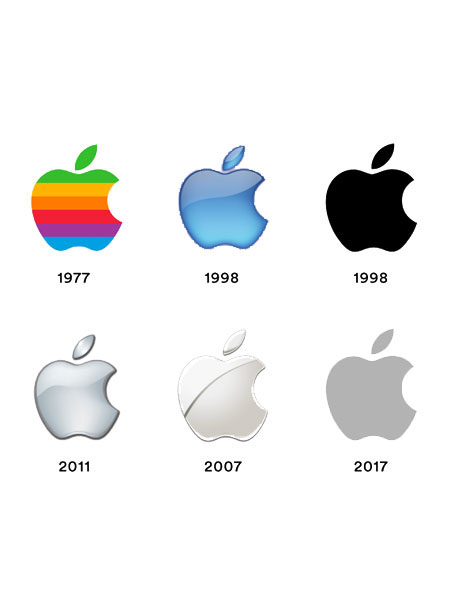
2. 1977 to 1984: The Rainbow Color with Brand Name
In 1977, Rob Janoff created the iconic Rainbow-Colored apple with a bite taken out of it. This logo symbolized Apple’s focus on creativity, diversity, and user-friendliness. The bite was added to differentiate it from a cherry and avoid visual ambiguity. The rainbow colors reflected Apple's commitment to color computing, a unique feature at the time.
3. 1984 to 1998: major refinement
Steve Jobs was forced out of Apple in 1986 due to a conflict with company executives. But he returned in 1997 as the company was close to going bankrupt. One of the biggest challenges that Steve Jobs faced was to revamp the company’s image, starting from its logo. The major change in the 1984 redesign of the Apple Logo was removing the Brand Wordmark from the design. The folks at the top thought the Apple icon was now a world-famous symbol and didn’t need the brand name for identification. They were right.
To Book an Appointment with Guru Aum Sushant
📞 Call or WhatsApp Ms. Vijaya at: +91-7310639500
✉️ Email us: info@logo-company.in, imediainfotech@gmail.com
🕙 Time: 10:00 AM to 7:00 PM IST


4. 1998 to 2001: The Classic Design
Computers started to get slimmer and sleeker. Many began wearing silver or metallic coats, and the rainbow logo didn’t sit right in this ecosystem. The return of Steve Jobs to Apple during this period inspired a brand overhaul. The Apple logo had already registered in the minds of customers in terms of its shape. But that was all. The company changed its colors and opted for a black and white logo. The iMac was the first device to bear this bold new design.
5. 2001 to 2007: A 3D Spin
Apple released Cheetah, a MacOS 10.1, in 2001 with the aqua Apple Logo, along with popular products such as the iPod, iTunes, and more. It was a revolutionary year for the brand as many of its products were popular and helped Apple to earn record profits. In 2007, Apple changed the logo to a chrome-textured design to go with its upcoming aluminum-based products.
6. 2007 to 2017: The Glass Effect Logo
In 2007, Apple embraced a 3D glass-effect logo to match the visual aesthetics of macOS and iOS at the time. This logo had a shiny, reflective surface, enhancing its premium and futuristic appeal. It was prominently featured on iPhones, MacBooks, and Apple Store signage.
7. 2017 to today
Since 2017, the Apple logo has remained minimalist and monochrome, but Apple has introduced subtle refinements based on material and product design. The logo appears in various finishes such as glossy, matte, and metallic, adapting to different devices like iPhones, MacBooks, and iPads. On digital platforms, Apple primarily uses a flat white or black silhouette, ensuring high visibility. This versatile branding approach reinforces Apple's identity while maintaining a modern, timeless aesthetic.
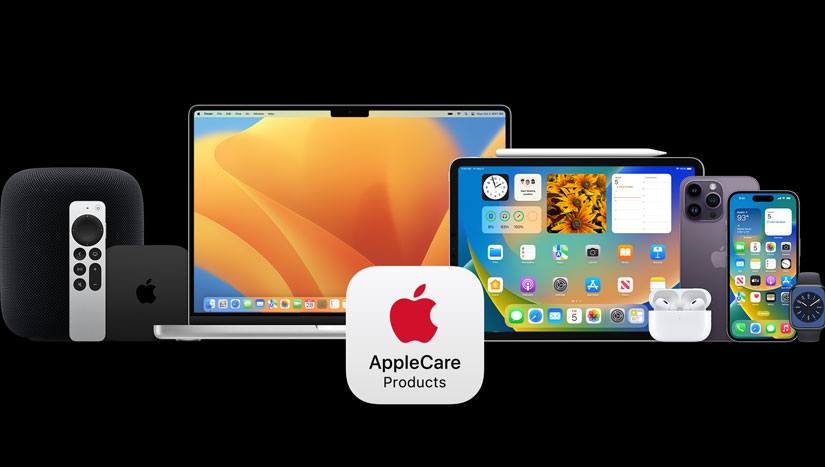
Apple Products


To Book an Appointment with Guru Aum Sushant
📞 Call or WhatsApp Ms. Vijaya at: +91-7310639500
✉️ Email us: info@logo-company.in, imediainfotech@gmail.com
🕙 Time: 10:00 AM to 7:00 PM IST
• Global Recognition:
The Apple logo is synonymous with premium technology and innovation.
• Minimalism & Elegance:
The logo’s evolution reflects Apple’s design philosophy – simple yet powerful.
• Consumer Trust:
Apple’s brand loyalty is reinforced by its clean and consistent logo.
• Adaptability: The monochrome Apple logo seamlessly fits various product lines, packaging, and marketing materials.
• Cultural Influence:
The Apple logo is widely used in pop culture, tech industry discussions, and marketing case studies.
The Apple logo has been associated with various interpretations:
• Knowledge & Discovery: Inspired by Newton’s apple, representing human intellect.
• Forbidden Fruit: Some speculate it references the biblical story of Adam and Eve.
• Alan Turing Tribute: A popular myth suggests the logo honors Alan Turing, the father of modern computing, who died after allegedly consuming a cyanide-laced apple. However, designer Rob Janoff denies this connection.
• Simplicity & Innovation: The bite in the apple signifies approachability and distinction from other fruits.

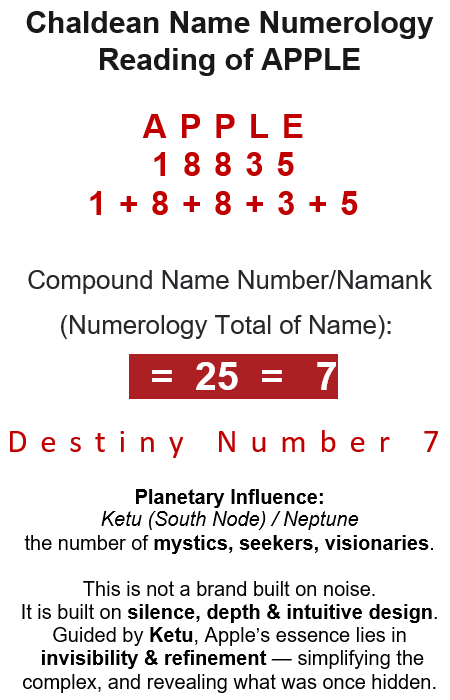
Numerology suggests that numbers have vibrations that influence branding and business success. Let's analyze Apple’s brand numerology:
• Apple (1 + 8 + 8 + 3 + 5)= 25 → 2 + 5 = 7
• Destiny Number: 7
• Ruled by: Ketu (as per Vedic astrology) or Neptune (Western equivalent)
• Mysterious, spiritual, analytical, and inward-looking.
• Often linked with innovation, technology, and philosophy.
• 7 is not materialistic – it reflects deep thinking and unconventional success.
• Insight: Apple’s “7” vibration signifies a brand born for innovation and disruption. Its mysterious logo, sleek design, and minimalist approach reflect number 7’s refined energy. Many 7-numbered brands often change the world silently but powerfully.
Apple’s Official Incorporation Date:
• Date: April 1, 1976
• Zodiac Sign: Aries
• Ruling Planet: Mars
• Mars dominance gives Apple the power to lead in tech wars and maintain a competitive edge.

Numerology suggests that numbers have vibrations that influence branding and business success. Let's analyze Steve jobs Numerology:
• DOB: February 24, 1955
• Steve Jobs = 3 + 4 + 5 + 6 + 5 + 1 + 7 + 2 = 33 → 6
Insights:
• 6 and 9 are powerful humanitarian numbers.
• Life path 9 indicates a visionary with a mission to change the world.
• Venus (6) provided aesthetic genius, while Mars and Sun added aggression and leadership.
• Zodiac: Pisces (ruled by Jupiter)
• Ascendant Likely: Leo (based on leadership traits and public presence)
• Planetary Strength: Strong Jupiter, Sun, and Mercury — helped Steve communicate, visualize, and dominate markets.
Apple’s Official Incorporation Date:
• Date: April 1, 1976
• Zodiac Sign: Aries
• Ruling Planet: Mars
Steve Jobs' spiritual journey played a significant role in shaping his visionary mindset and the minimalistic philosophy behind Apple Inc. Born on February 24, 1955, to a Syrian Muslim biological father, Abdulfattah Jandali, and an American Catholic mother, Joanne Schieble, Steve was later adopted by Paul and Clara Jobs, who were Armenian and German Christians. Though raised in a Christian household, Jobs questioned traditional religion from a young age.
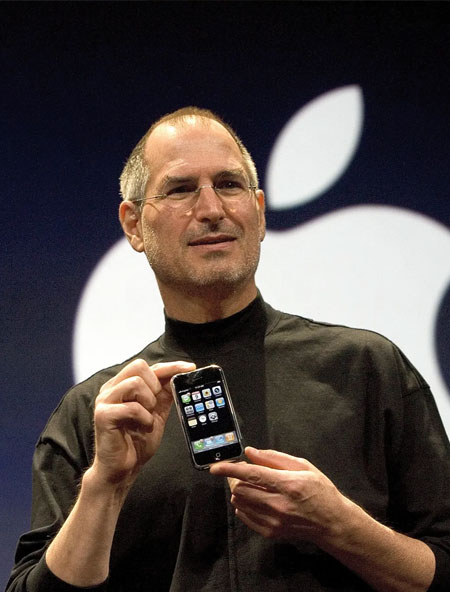
When we think of Steve Jobs, the mind often jumps to innovation, sleek Apple devices, and a legacy that redefined technology. But behind the iconic black turtleneck and Apple’s revolutionary products lies a lesser-known but deeply transformative chapter in his life – his spiritual journey to India in 1974. This was not just a casual trip; it was a quest for enlightenment that became a turning point in shaping his personal philosophy and Apple’s minimalist design vision.
In the early 1970s, a young Steve Jobs was already questioning the materialistic culture of the West. At just 19 years old, he was searching for answers to life's deeper questions – Who am I? What is the purpose of life? Jobs, like many of his generation, turned toward Eastern philosophy. He became fascinated with the teachings of Hinduism and Zen Buddhism and decided to travel to India with his friend Daniel Kottke. Jobs' spiritual hunger was rooted in his early exposure to various faiths. Born to a Syrian Muslim biological father and an American Catholic mother, and raised by Christian adoptive parents, Steve Jobs had a unique and diverse spiritual backdrop. This, combined with his existential curiosity, led him to seek spiritual masters in India.
Jobs’ main purpose for visiting India was to meet Neem Karoli Baba, a revered Hindu saint known for his wisdom and simplicity. Neem Karoli Baba (also called Neeb Karori Baba or Maharaj-ji) had a large following, including several American spiritual seekers. His ashram in Kainchi, Uttarakhand, had become a spiritual hub for those looking to explore higher consciousness. However, when Jobs arrived in India, he was met with disappointment – Neem Karoli Baba had passed away in September 1973, just before Jobs' arrival in early 1974. Despite the saint’s physical absence, Jobs visited the Kainchi Dham Ashram, where he reportedly experienced a powerful spiritual awakening.
Steve Jobs' wife, Laurene Powell Jobs, reportedly visited the Kumbh Mela 2025 in India seeking spiritual experience and deeper understanding of Indian philosophy, similar to Steve Jobs’ own spiritual journey to India in the 1970s.
Why she might have came to India Maha Kumbh
To honor Steve Jobs’ connection to India and spirituality. Out of personal interest in mysticism, yoga, and Eastern traditions. Possibly to experience the spiritual energy of the world’s largest gathering of seekers and sadhus. Also
Jobs had deeply admired Neem Karoli Baba and Hindu thought. His minimalist and Zen-influenced worldview was rooted in his Indian journey. Laurene likely visited as part of her own soul-searching or tribute to Steve’s spiritual influences. It was not for publicity or politics—rather a quiet pilgrimage of meaning tied to her late husband’s legacy.
Apple Inc., the world’s most valuable tech company, reached a historic milestone in 2022 by becoming the first publicly traded company to hit a $3 trillion market valuation. As of 2025, Apple’s market cap continues to hover around this record, driven by its global dominance in iPhones, iPads, MacBooks, and its expanding digital services. With annual revenues surpassing $400 billion, Apple remains a financial powerhouse and a brand symbolizing innovation, simplicity, and trust.
The late Steve Jobs, Apple’s visionary co-founder, had a personal net worth of approximately $10–11 billion at the time of his death in 2011. Surprisingly, most of this wealth did not come from Apple stock, but from his 7.3% stake in Pixar Animation Studios, which was acquired by Disney in 2006. This deal made him the largest individual shareholder in Disney. His legacy continues through his wife, Laurene Powell Jobs, who now manages the family’s investments with a net worth exceeding $20 billion.
Apple’s incredible journey from a garage startup to a trillion-dollar tech empire is a testament to innovation, timing, and visionary leadership. Steve Jobs, with his unique blend of creativity, spirituality, and business acumen, laid the foundation for a legacy that continues to shape the world. His wealth, much of it rooted in strategic foresight with Pixar, and Apple’s continued dominance in 2025, reflect more than just numbers – they symbolize the power of ideas backed by relentless passion. Whether you're an entrepreneur, a tech lover, or a spiritual seeker, the story of Apple and Steve Jobs proves that success is not just built with money, but with vision and purpose.
Call Ms. Vijaya
Mobile / WhatsApp: +91 - 73106 39500 (10 am to 7 pm)
If numbers are busy / not picked, kindly WhatsApp
or Email us at: imediainfotech@gmail.com
Naming + Logo Website: www.Logo-Company.in
Guru Ji's Youtube Channel
www.youtube.com/@AumSushant
Guru Aum Sushant Ji's Site
www.ShivaBlessings.com